

Luke Brooks, Senior Commercial Manager Specialist for Packed Products at Tarmac, explores what the Government's new ratings reveal about the pressures facing the local road network and why potholes are a symptom of deeper, long-term challenges.
The Department for Transport’s new traffic-light rating system for local highway authorities has put potholes firmly back in the spotlight. By categorising councils as red, amber or green based on road condition, spending effectiveness and use of best practice, the government says it is bringing greater transparency to how England’s roads are maintained and how public money is spent.
At face value, the system offers a simple snapshot for drivers frustrated by deteriorating surfaces. But the story behind the ratings is more complex. Potholes are not just a visible symptom of underinvestment or inefficiency; they are the result of long-term structural pressures on a road network facing demands it was never designed to accommodate.
The new ratings arrive alongside a commitment of £7.3 billion for local road maintenance through to 2029/30, including nearly £1.6 billion in the current financial year. While this represents a welcome increase, funding alone does not guarantee better roads. Variation in approach, capacity, and monitoring means outcomes can differ across councils. The traffic-light system highlights these differences, but improvement depends on access to the right tools, skills, and strategies.
One factor often overlooked in public discussion is how rapidly the nature of traffic has changed. Vehicles using UK roads are becoming heavier and more powerful, particularly as electric vehicles make up a growing share of the fleet. Battery packs add significant weight, while higher torque, advanced braking systems, and modern steering place additional stresses on road surfaces. Academic research has suggested that electric vehicles could increase road wear by 20–40% compared with traditional petrol or diesel cars, purely as a result of mass.
Much of the local road network was built decades ago to standards never intended for today’s loading patterns. When heavier vehicles repeatedly travel over ageing surfaces, small defects quickly become structural failures. In that context, potholes are not simply maintenance lapses; they are an inevitable outcome of increased demand and evolving traffic.
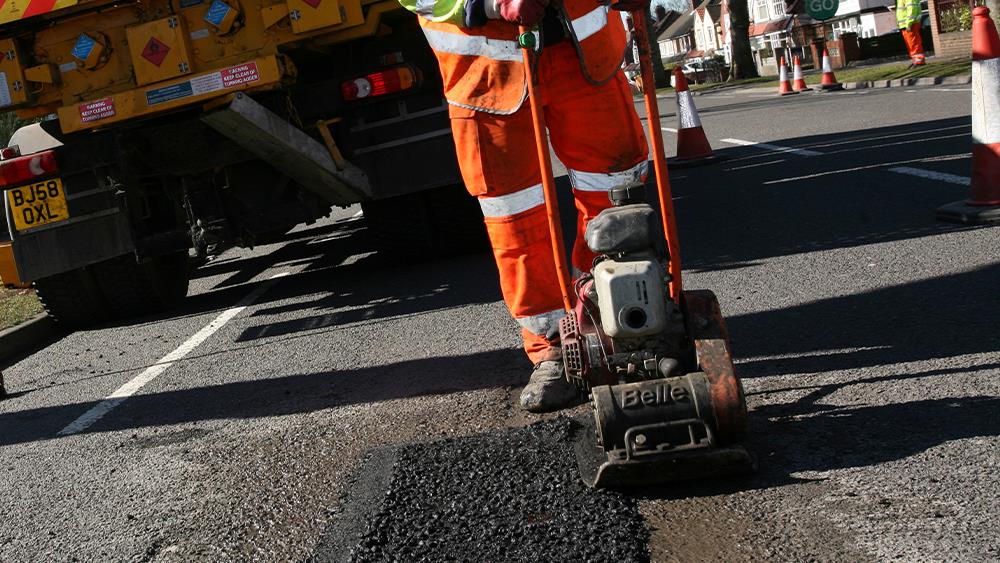
Against this backdrop, the DfT’s green-rated authorities are those recognised for investing in preventative maintenance rather than relying solely on reactive patching. This aligns closely with what the highways sector has long emphasised: that whole-life cost, not upfront price, should drive decision-making. Filling the same pothole repeatedly may appear cheaper initially, but it multiplies costs associated with labour, traffic management, disruption, and carbon emissions, while affecting public confidence.
Solutions exist that allow councils to address these challenges efficiently and sustainably. Modern repair materials, such as cold lay asphalt systems and biogenic asphalt technologies, enable rapid, durable repairs that reduce the need for repeated interventions. Products like Ultipatch Viafix Quick are designed for high-stress locations, supporting long-lasting repairs in challenging conditions, while Ultipatch Pothole Zero integrates plant-based binders to minimise carbon impact without compromising performance. By adopting these materials alongside robust training and application practices, councils can ensure repairs last longer, reduce disruption, and contribute to net zero objectives.
Environmental considerations are increasingly important. Every repair carries a carbon cost from material production, transport, plant, and repeat visits. Roads that fail prematurely not only cost more financially; they also generate avoidable emissions. Choosing long-lasting, low-carbon repair materials helps minimise this impact while maintaining safety and road quality.
Essentially, addressing the problem effectively requires a combination of sustained investment, preventative maintenance, and durable, environmentally conscious repair solutions. By taking a holistic approach that includes modern materials and repair techniques, local authorities can improve road quality while managing costs and environmental impact.
If the rating system encourages a shift toward preventative maintenance, whole-life thinking, and greater consistency across the network, it can provide a constructive catalyst for long-term improvement. England’s pothole problem was decades in the making and will not be solved overnight, but these ratings create an opportunity, not just to measure performance, but to guide more strategic and sustainable approaches to maintaining the network.
Tarmac's online guide to pothole repairs can be viewed at: https://www.tarmac.com/potholes/