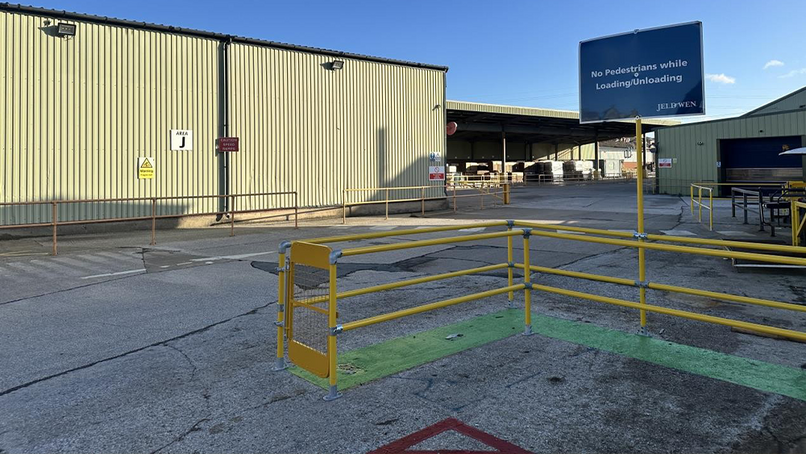
Increased pedestrian walkways and vehicle segregation are among the initiatives introduced across its Sheffield site.
A project to drive positive change through targeted health and safety measures has seen manufacturer JELD-WEN increase pedestrian and vehicle segregation across its Sheffield site.
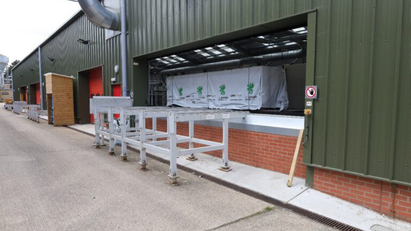
As a result, protected pedestrian walkways have been introduced/improved across all areas of the site where pedestrians and vehicles may need to interact in the same area. All warehouses on site are now pedestrian-free zones, along with the addition of external driver waiting rooms.
While JELD-WEN has a three-metre distance rule in place for all vehicles when driven near pedestrian areas, this programme has seen additional barriers and safe spaces put in place in high vehicle usage areas.
This has been supported by the introduction of strategic driver waiting rooms to reduce the chance of ‘drive aways' and to ensure the safety of external drivers when visiting the site.
Pedestrian-free warehouses have also been introduced. In the event of pedestrian access being required, a ‘stand down' procedure is now in place where all drivers must leave their vehicles to mitigate the chances of any accident occurring and barriers deployed to close off access points.
JELD-WEN's health and safety team have been analysing the Sheffield site to identify areas that would benefit from enhanced safety measures being put in place –and it was found that four areas of the Sheffield site would benefit from further driver-pedestrian safety measures being implemented.
Paul Bailey, Environment, Health and Safety Manager at JELD-WEN UK, said: "Workplace transport incidents are a major cause of serious injuries and fatalities. Clear segregation reduces the risk of impacts, particularly in high traffic areas, such as warehouses and unloading bays.
"Safety will always be our number one priority, and we are constantly looking for areas to improve. Improving visibility and predictability – our designated routes help drivers anticipate where pedestrians may be present, and help pedestrians remain on safe walkways, creating predictable movement patterns that improve overall safety."