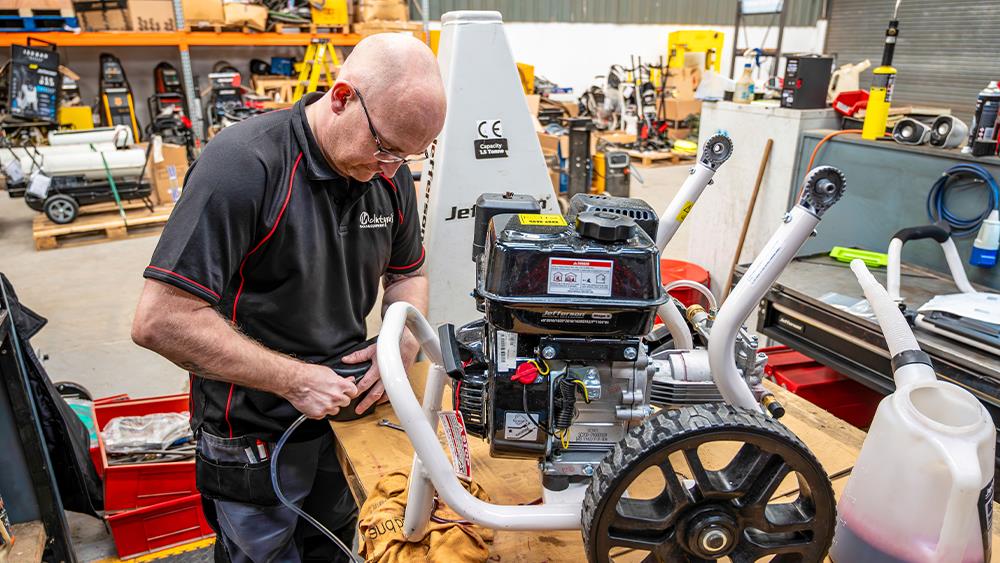


Warranty, once a secondary concern, have evolved into a central pillar in fostering customer trust and loyalty. Darren Binns, National Sales Manager at Jefferson Tools, asserts that manufacturers must view warranties not as a fallback but as a strategic approach to ensuring reliability and nurturing long-term customer relationships.
In the past, warranties were often an afterthought; just another item to tick off a list. Today, however, they have become a key business strategy. In industries like tools and equipment, in particular, where products face intense use and harsh conditions, customer expectations are continuously growing.
Tools are no longer just machines; they are the foundation of someone’s livelihood. Professionals now expect the same reliability from the manufacturer when things go wrong as they do from the tools themselves.
This shift reflects a broader industry trend: a focus on Total Cost of Ownership (TCO). Customers now consider the lifetime cost of their tools, including repairs, downtime, and maintenance; not just the initial purchase price. For manufacturers, this means rethinking how warranties are structured. What was once a safety net is now a key value proposition.
Clarity, transparency, and education
One of the cornerstones of Jefferson Tools’ warranty programme is clarity. Every product comes with a clearly defined warranty period; typically one year for electrics and engine-powered tools, with extended or lifetime cover for select products. The programme’s transparency eliminates the ambiguity that often plagues warranties across sectors.
Warranty goes beyond fixing a product when it fails. We ensure our customers know exactly what is covered and how to prevent common issues. Our goal is to eliminate any surprises when it comes to repair terms.
Jefferson Tools also places a strong emphasis on customer education, ensuring users know how to properly maintain their tools and avoid potential warranty exclusions. By doing so, the company reduces the number of claims and empowers customers to maximize the life of their products.
Equipping customers with the knowledge to care for their tools properly reduces the likelihood of misuse or neglect. This leads to fewer repairs and less downtime for professionals. We believe a well-informed customer is a successful customer.”
Warranty as a differentiator in a competitive market
In a marketplace where price and features alone no longer guarantee success, warranties have emerged as a significant differentiator. Consumers are seeking manufacturers who offer not just a quality product, but also a solid commitment to after-sales service.
For distributors and dealers, a robust warranty offering can help reinforce trust with customers. For end-users, a clear and accessible warranty programme can often tip the scales when choosing between competing products.
Warranty gives customers confidence in their purchase. They want to know they are investing in more than just a tool; they are investing in a relationship with a company that will support them through thick and thin.
A core business strategy
As tools and equipment continue to evolve, manufacturers must adapt their warranty strategies accordingly. Today’s customers expect more than just a product. They demand a comprehensive package that includes post-purchase support. Companies that view warranty as a core business strategy are best positioned to build lasting relationships and foster customer loyalty.
The future of warranties goes beyond fixing a product after failure; it focuses on ensuring customers never experience downtime in the first place. The best warranty programmes are built on trust, transparency, and a commitment to helping customers succeed in their work.