

New analysis highlights the scale of the challenge facing the government’s Warm Homes Plan.
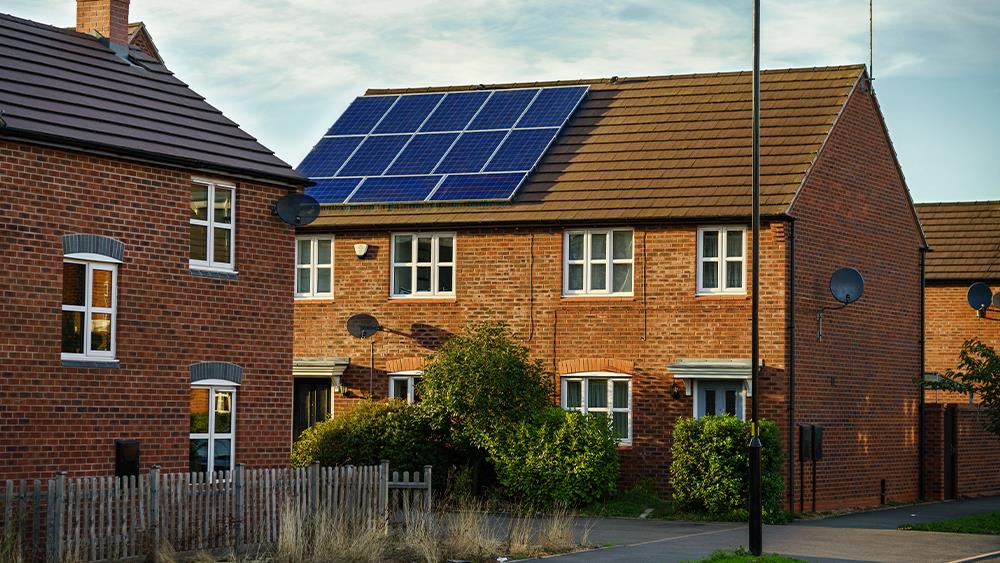
More than nine in ten homes listed for sale in the UK lack commonly advertised ‘green’ features, such as solar panels, EV charging points or heat pumps, according to new research from home improvement specialists Eurocell.
The findings, published in the State of Sustainable Construction 2026 report, are based on analysis of nearly 150,000 residential listings on Rightmove during November 2025, alongside EPC performance data and indicators of consumer interest in low-carbon home upgrades.
The analysis found that just 6.6% of homes listed for sale featured at least one advertised sustainable upgrade. In contrast, housing stock data indicates that 56% of UK homes remain rated EPC D or below, highlighting the scale of the retrofit task implied by current and proposed government programmes, including the £15 billion Warm Homes Plan.
While property listings do not capture every energy efficiency improvement made to a home, the report highlights a clear gap between the scale of policy ambition and the extent to which low-carbon features are currently visible or commonplace in homes coming to market. As a reflection of properties being bought and sold across the country, listings provide a useful indicator of how embedded these features are within the existing housing stock.
Commenting on the findings, Martin Benn, Head of New Build at Eurocell, said: “Delivering low-carbon housing at scale depends on a supply chain that can innovate, invest and expand at pace. This research shows just how significant the challenge remains.
"The volume of homes still requiring energy performance improvements far outstrips current market progress, underlining why coordinated action across policy, industry and skills development will be essential over the coming decade.”
The report also introduces a Composite Sustainability Index to illustrate regional differences in retrofit readiness and consumer engagement. The index combines three factors: the proportion of homes achieving EPC ratings of A or B, the prevalence of advertised sustainable features in property listings, and local Google search interest in upgrades such as solar panels, EV charging points and heat pumps.
Using this approach, Milton Keynes ranked highest with a score of 56 out of 100, supported by a relatively modern housing stock and 23% of homes rated EPC A or B. At the other end of the scale, Blackpool recorded a score of 2.5 out of 100, with just 3% of homes achieving EPC A or B, highlighting the scale of the issue in areas dominated by older properties.
Alongside supply-chain constraints, the research also points to rising consumer interest in low-carbon technologies.
Across the UK, solar panels, EV charging points and heat pumps emerged as the most searched-for sustainable home features, suggesting growing awareness driven by energy costs and long-term efficiency concerns. The report cautions that without sufficient delivery capacity across materials, manufacturing and skilled labour, this demand risks continuing to outpace supply.